Origin story
Colombia
A country narrow enough to cross in a day and vertical enough to harvest all year round.
Three ranges, three climates
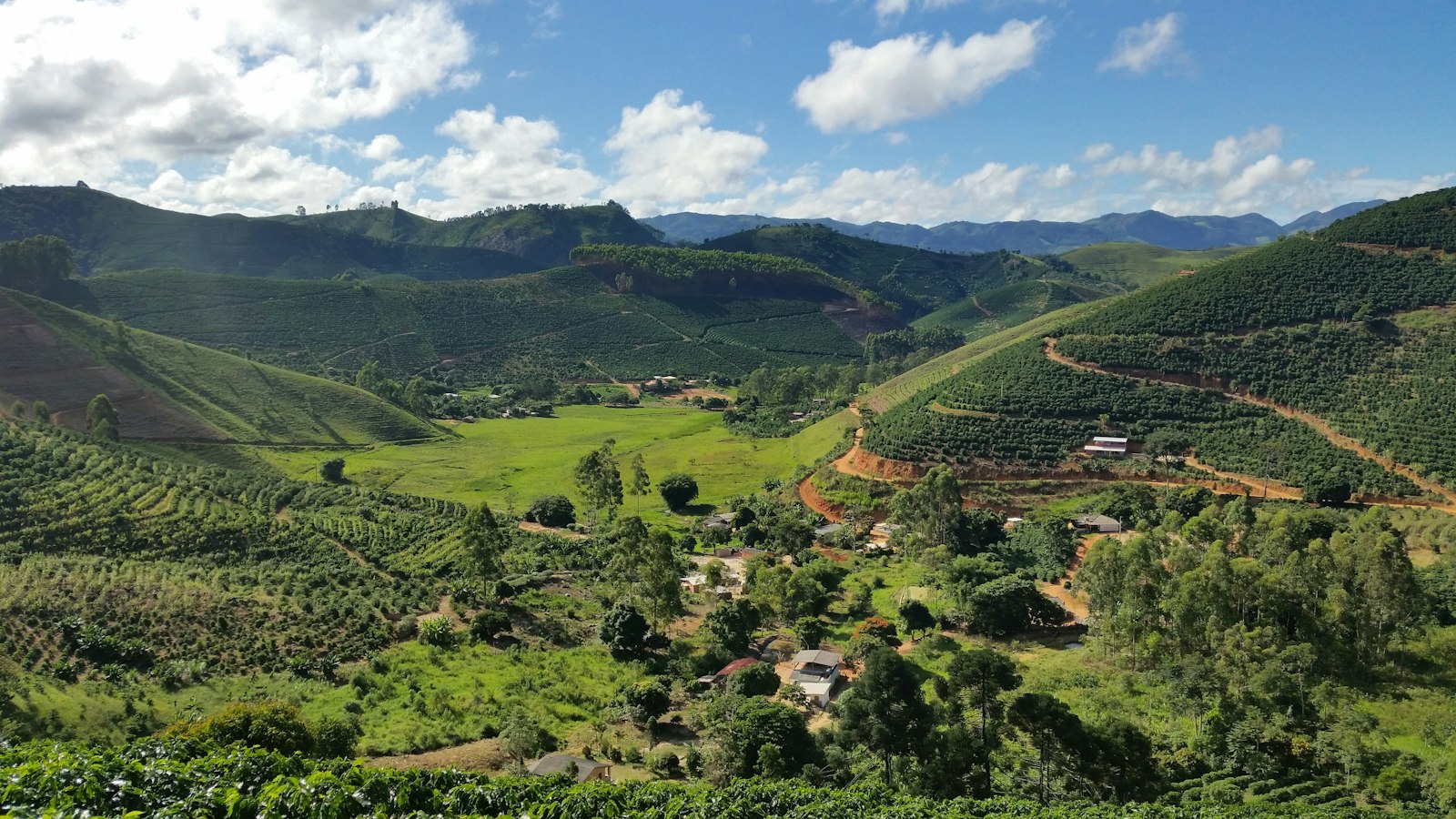
The Andes split into three cordilleras as they enter Colombia, and coffee grows on the flanks of all of them. The result is a country where harvest is not a season but a rolling event: the north picks while the south flowers, and a second smaller crop — the mitaca — fills the gap between.
For a buyer this means Colombian coffee is almost never more than a few months from the tree. For a farmer it means a working year with no obvious off-season, and a landscape too steep for a machine to be any use.
Small farms, organised
The average Colombian coffee farm is one to two hectares. What makes that viable is a century of collective structure: a national growers' federation that runs research stations, guarantees a purchase price, and has arguably done more for the country's reputation abroad than any single roaster.
That structure also explains the varietal picture. When leaf rust threatened the crop, the federation's research arm bred resistant hybrids and distributed them at scale, and a great deal of Colombian coffee is now Castillo rather than the Caturra it replaced. Growers who kept Caturra did so knowing exactly what they were risking.
Picked cherry by cherry
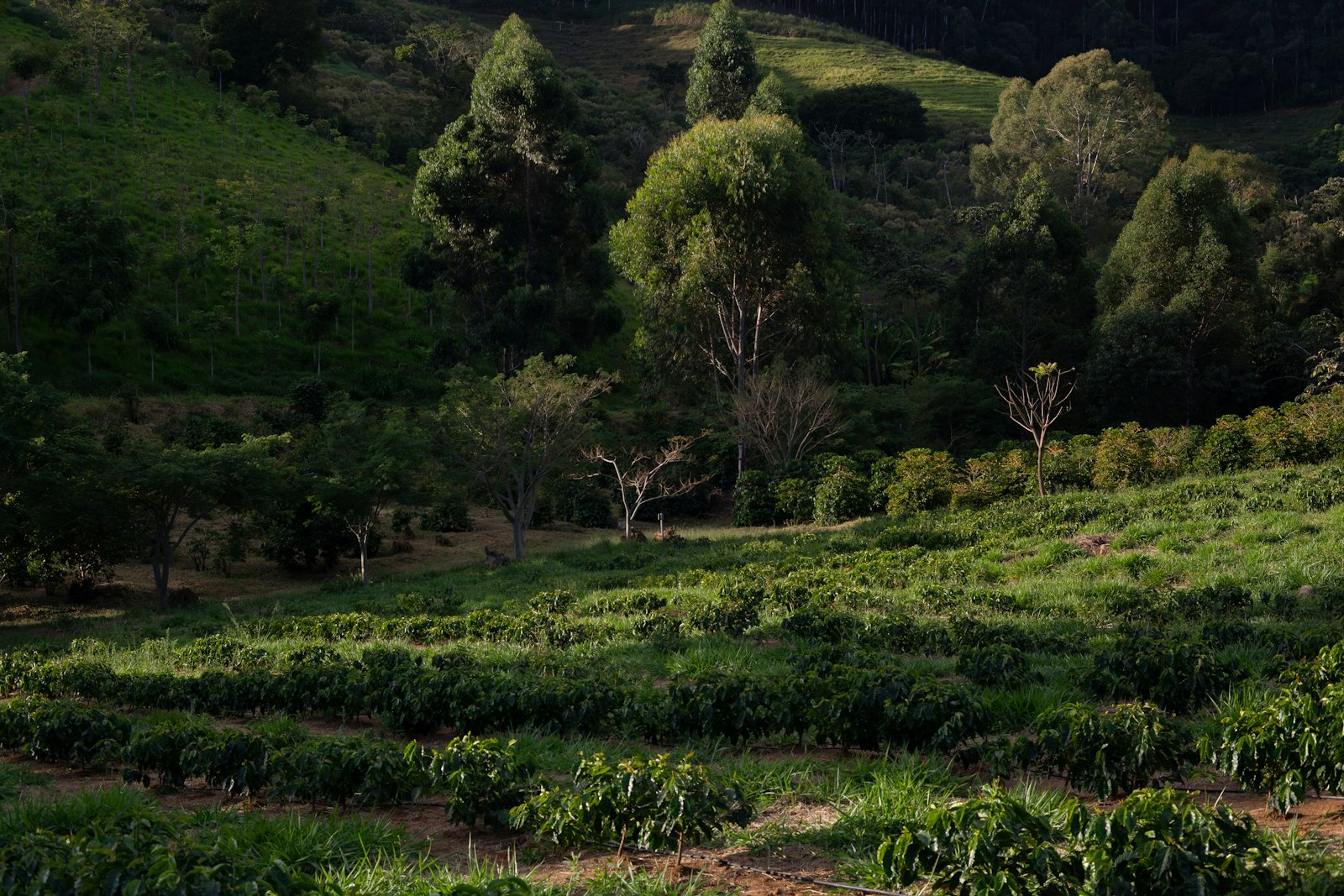
On a slope that steep, every cherry is picked by hand, and a picker walks the same tree repeatedly across a harvest because the fruit does not ripen together. Selective picking is the single largest quality variable in Colombian coffee and the largest labour cost.
Processing is almost universally washed, often on the farm itself: a small pulper, a fermentation tank, and a drying deck or a parabolic tunnel under plastic. The cup that comes out is the reason Colombia is the default recommendation for anyone who has not decided what they like yet.
What it tastes like, and why
Caramel, red apple, a rounded citrus acidity and a soft body — balanced enough to be the backbone of a thousand blends, and clean enough to be worth drinking alone. Huila and Nariño push brighter and more floral with altitude; Tolima and Antioquia sit sweeter and heavier.
The predictability is not blandness. It is the product of a growing region with reliable rainfall, consistent altitude, and a processing method with very few places to go wrong.
The coffee to hand someone who says they do not like coffee, and the one to check a roaster against when you want to know how carefully they work.