Origin story
India
Coffee grown in the shade, under pepper vines, and in one case deliberately left out in the monsoon.
Seven seeds
The story India tells about its own coffee is that a pilgrim named Baba Budan carried seven coffee seeds out of Yemen in the seventeenth century, at a time when exporting fertile beans was forbidden, and planted them in the hills of Karnataka. The range still carries his name.
Whatever the accuracy of the detail, coffee has been grown in these hills for several hundred years, long before it reached most of the countries now associated with it, and the plantings today are concentrated in Karnataka, Kerala and Tamil Nadu.
Grown under a canopy
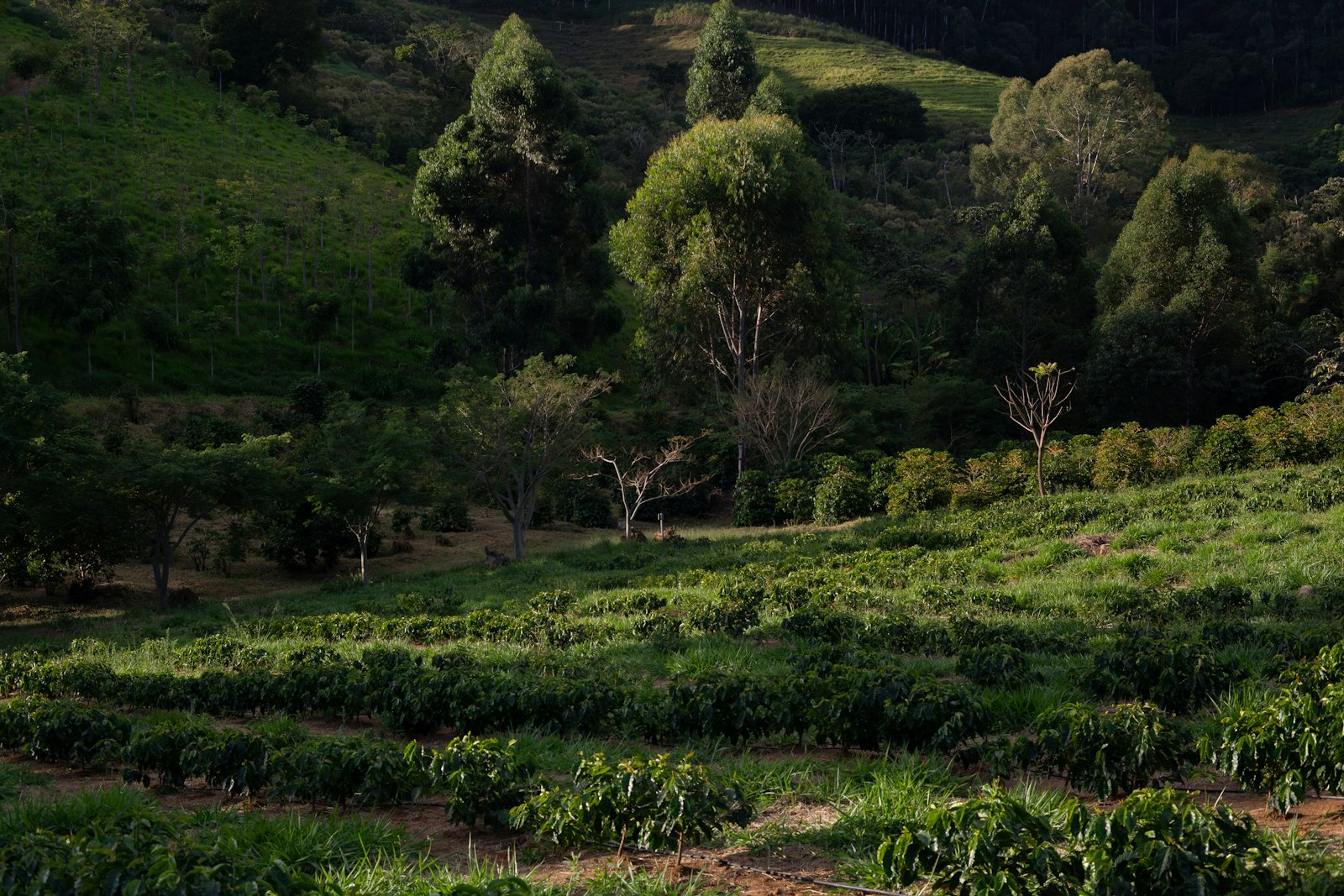
Almost all Indian coffee is shade-grown, and not incidentally: it sits under a deliberate two-tier canopy of native and planted trees, with black pepper trained up the trunks and cardamom, areca and vanilla between the rows. A coffee estate here is a mixed forest that happens to yield coffee.
That has consequences beyond the cup. Shade slows cherry maturation and moderates temperature, and the canopy supports a genuine amount of wildlife — these plantations are among the more biodiverse agricultural landscapes in the tropics.
Monsooned Malabar
In the age of sail, coffee from the Malabar coast spent months in a damp ship's hold on its way to Europe, and arrived pale, swollen and mellow. Buyers acquired a taste for it, and when faster steamships ended the effect, the trade set about recreating it on purpose.
Monsooning is that recreation. Dry-processed beans are spread in open-sided warehouses along the coast during the southwest monsoon, raked and restacked over several weeks while the humid wind blows through them. They swell, fade to a pale gold, and lose almost all their acidity, leaving a thick, musty, faintly spiced cup. Nothing else on the shelf resembles it.
Arabica and robusta both
India is a substantial robusta producer as well as an arabica one, and unusually its robusta is taken seriously — washed and carefully processed, it is bought by European espresso roasters who want crema and body without the harshness the species is usually assumed to bring.
The domestic picture is regional: filter coffee brewed with chicory and served with hot milk in the south, tea almost everywhere else. Most of the specialty crop is exported, though the cafés of Bangalore and Chennai have been changing that quickly.
The origin to reach for when you want a cup that tastes of a place and a process rather than of a varietal.
In the shop