French press · 5 min read
The French press deserves better than it gets
Full immersion, a metal mesh and four minutes. Muddy only if you stir it at the end, which almost everyone does.

The recipe
- Coffee
- 60 g
- Water
- 1000 g
- Ratio
- 1:16.5
- Grind
- Coarse — breadcrumbs
- Temperature
- 95 °C
- Total time
- 9 minutes, mostly waiting
The mesh is not a filter
A paper filter removes oils and the finest particles. A metal mesh removes neither — it is a strainer holding back the grounds while everything else goes through. That is why a French press has a weight and a texture no cone can produce, and it is also why a careless one tastes like silt.
The oils are the point. They carry aroma compounds that paper absorbs, which is why the same coffee smells richer from a press and cleaner from a V60. Neither is more correct.
Where the sediment comes from
During a four-minute steep, most of the fine particles settle out on their own. Then the plunger goes down, stirs the whole vessel, and lifts them straight back into suspension — the sediment in the cup was mostly created in the last three seconds of brewing.
The fix is to stop treating the plunger as a press. Break the crust, skim the foam, wait, and then push the plunger down just to the surface rather than to the bottom. Pour gently and leave the last centimetre behind.
Coarse, and consistently coarse
Immersion for four minutes at a coarse grind extracts evenly, but only if the grind actually is coarse. Cheap grinders produce a wide spread of particle sizes, and the dust in that spread over-extracts badly at this contact time.
If your press tastes bitter no matter what you do, the grinder is the likeliest culprit — not the method, and not the coffee.
It scales, which is its real advantage
A litre press makes four cups without anyone standing over a kettle, which no pour-over does. For a table of people, or a morning where the coffee is not the event, that is worth more than the last five percent of clarity.
Decant into a warmed jug once brewed. Coffee left sitting on its grounds keeps extracting, and the second cup out of an undecanted press is always worse than the first.
Step by step
- 01Warm the press with hot water and tip it out.
- 02Add 60 g of coarsely ground coffee.
- 03Pour 1000 g of water at 95 °C, all at once, and start a timer.
- 04At 4:00 break the crust with a spoon, stirring just the top.
- 05Skim the foam and floating grounds off with two spoons and discard.
- 06Wait a further 5 minutes without touching it. The fines settle.
- 07Lower the plunger only to the surface, then pour slowly and stop short of the bottom.
When it goes wrong
- Silty, gritty last mouthful
- You plunged to the bottom, or poured the dregs. Do neither.
- Bitter and drying
- Grind too fine, or you left it on the grounds. Decant next time.
- Weak and flat
- Under-dosed, or the water was off the boil too long.
- Cold by the third cup
- Pre-warm the press and decant into a warmed jug.
Brew this with
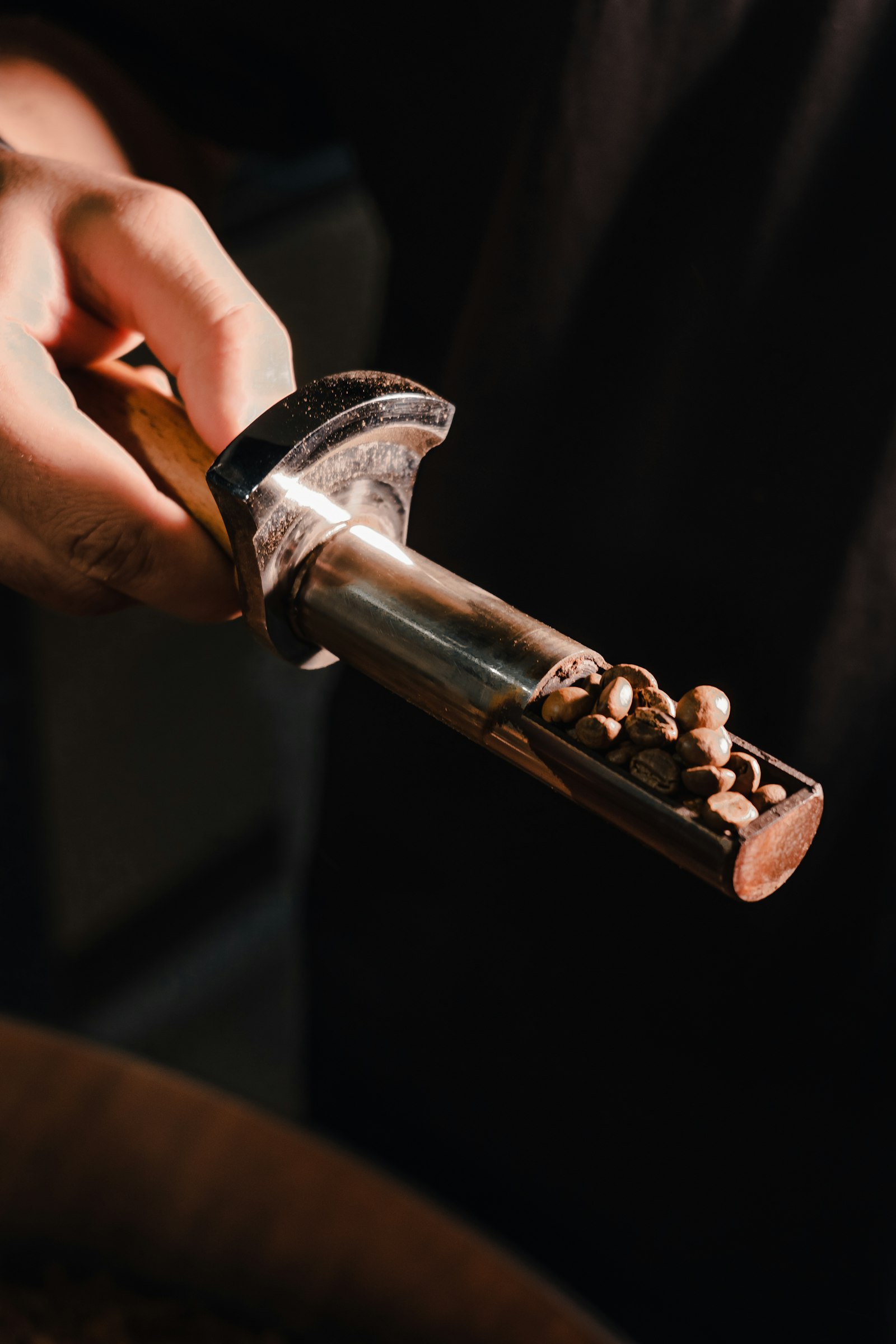
Monsooned Malabar
Example: An example to show how the shop will work — not on sale.Malabar Coast, India · 12,00 €
Low acidity and a heavy body are exactly what full immersion and an oily mesh amplify. This is the cup that method was built for.
See this coffee